USA authorized Seneca retailerAuthorized retailer1 or 2 capsules daily - 60 capsules per bottleMoney-back guaranteeMoney-back guaranteeLot SEN-26/SE-5620

Official product information

Seneca Ingredients: The Nine Parts of the Blend

Written and reviewed by the Seneca Editorial Desk · Last updated

Quick answer

Seneca combines nine ingredients in one 1,000 mg blend per two capsules.

The blend lists L-lysine HCL, apple cider vinegar, garcinia cambogia, tongkat ali, horny goat weed, wild yam, cinnamon, bitter melon and raspberry ketones. Single amounts are not printed, and the capsule is gelatin.

See the full label panel.

The Seneca ingredient list, from the label

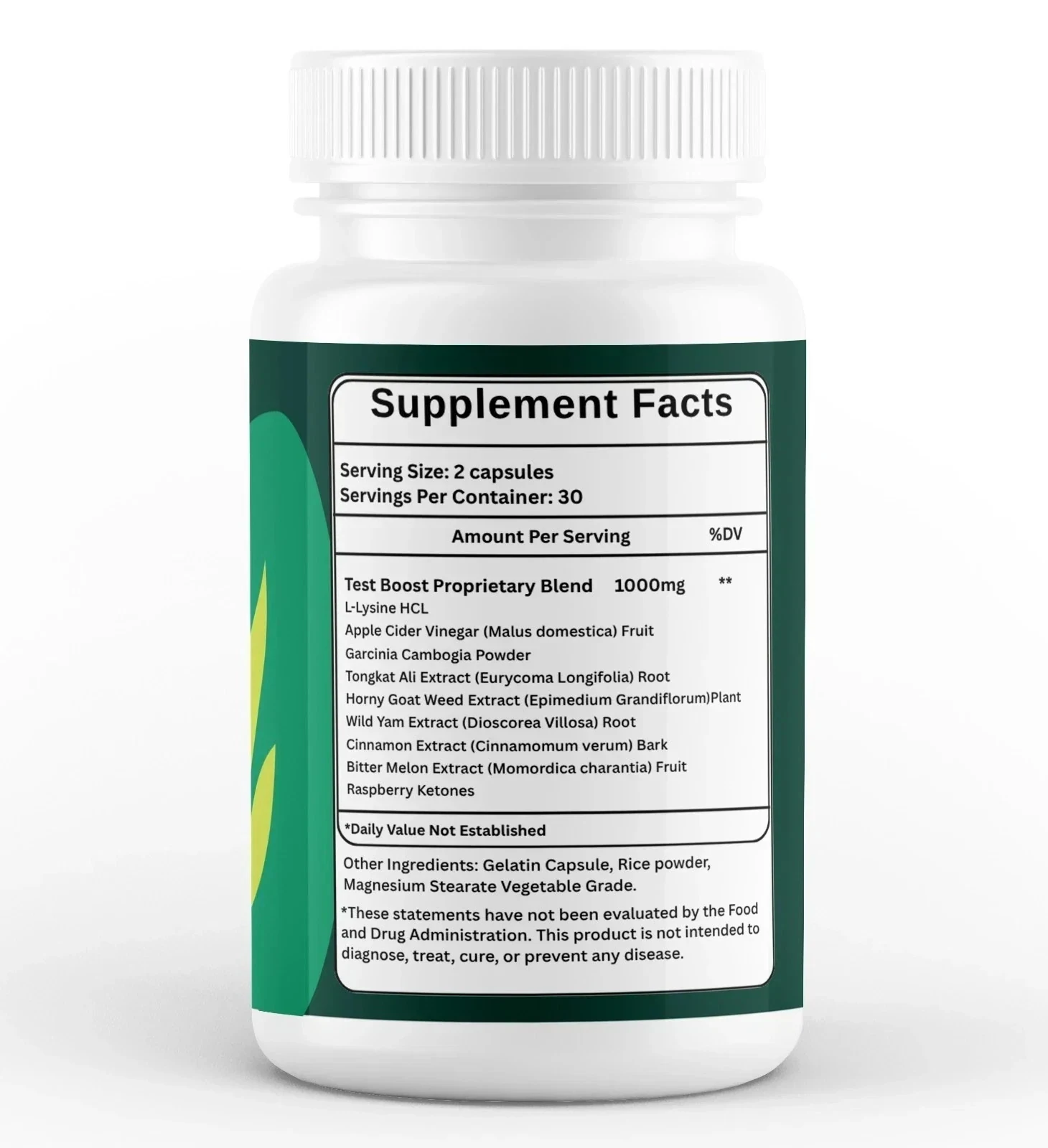
The Supplement Facts panel lists one printed as the Test Boost Proprietary Blend, 1,000 mg per 2 capsules. Nine ingredients sit inside it, in this order.

Before the list, two notes. The blend name is a testosterone-marketing name on a product sold for digestion, and we have no explanation for it. And the seller’s “Inside Seneca” image names only the first six; cinnamon, bitter melon and raspberry ketones appear on the bottle and not in the artwork. The panel is the legal document, so the panel is what we publish.

Seneca Supplement Facts panel
The back label: 2 capsules per serving, 30 servings, one 1,000 mg blend of nine ingredients.
Blend total: 1,000 mg. Daily Value not established. Blend ingredients run from most to least by weight.
OrderIngredientLatin name and partKindIn the seller’s ads?
1L-Lysine HCLAn essential amino acid, as the hydrochloride saltamino acidYes
2Apple cider vinegarMalus domestica, fruitfood ingredientYes
3Garcinia cambogia powderGarcinia gummi-gutta, fruit rindherbYes
4Tongkat ali extractEurycoma longifolia, rootherbYes
5Horny goat weed extractEpimedium grandiflorum, plantherbYes
6Wild yam extractDioscorea villosa, rootherbYes
7Cinnamon extractCinnamomum verum, barkherbNo
8Bitter melon extractMomordica charantia, fruitherbNo
9Raspberry ketonesA flavour compound found in raspberriescompoundNo
Test Boost Proprietary Blend1,000 mg per 2 capsules · nine ingredients · individual amounts not published
Equal slices are our drawing; label order is the only clue to the real split1,000 mg total

Each Seneca ingredient, one by one

What it is, what research says and what to watch for.

Amino acid

L-Lysine HCL

An essential amino acid, as the hydrochloride salt

  • One of the nine essential amino acids, sold here as the hydrochloride salt, which is the usual supplement form.
  • You already get it from any diet with protein in it: meat, fish, dairy, eggs, beans.
  • Its best-known supplement use is cold sores, where the evidence is mixed. It is also studied in some calcium-absorption work.
  • It is first on the blend list, so by label rules it is the largest share of the 1,000 mg.
  • Nothing about lysine is a digestive mechanism, and nothing we can find studies it for gut balance.

Watch for: Generally well tolerated. High doses can cause stomach upset and diarrhoea. Source: NIH Office of Dietary Supplements, “Dietary Supplements for Exercise and Athletic Performance (amino acids)”.

Food ingredient

Apple cider vinegar

Malus domestica, fruit

  • Fermented apple juice, dried into a powder for capsules.
  • It is the closest thing on this label to a traditional digestive ingredient, which is why it is worth taking seriously.
  • The actual research is mostly on blood sugar after meals and on appetite, in small studies with mixed results.
  • NCCIH’s summary is that there is little solid evidence for the health claims made about it.
  • A capsule of dried vinegar is also not the same product as a spoonful of liquid vinegar, and studies generally used the liquid.

Watch for: In liquid form it can erode tooth enamel and worsen reflux. In a capsule those concerns are smaller, but stomach upset is still possible. Source: National Center for Complementary and Integrative Health, “Apple Cider Vinegar”.

Herb

Garcinia cambogia powder

Garcinia gummi-gutta, fruit rind

  • Fruit rind of Garcinia gummi-gutta, also called Malabar tamarind.
  • Its active compound is hydroxycitric acid, or HCA. The label does not say how much HCA is standardised to, or whether it is standardised at all.
  • It is a weight-loss ingredient, not a digestive one, and it has been sold that way for two decades.
  • Reviews find the effect on body weight small at best, and generally not clinically meaningful.
  • It is the ingredient here with the most serious safety literature attached to it.

Watch for: Rare reports have linked garcinia-containing products to liver injury, including a small number of serious cases. Stop and see a doctor if you notice yellow skin or eyes, dark urine or unusual tiredness. Source: National Center for Complementary and Integrative Health, “Garcinia Cambogia”.

Herb

Tongkat ali extract

Eurycoma longifolia, root

  • Root of Eurycoma longifolia, from Southeast Asia, also called longjack.
  • Small trials have looked at male hormones, stress markers and exercise performance, with mixed results.
  • Studies typically use 200–400 mg a day of a standardised extract.
  • It is a men’s-vitality herb. Nothing here connects it to digestion.
  • Product quality varies widely, and some imported material has been found contaminated with heavy metals.

Watch for: Limited safety data. Ask a doctor if you take medication; quality varies between suppliers. Source: NIH Office of Dietary Supplements, “Dietary Supplements for Exercise and Athletic Performance”.

Herb

Horny goat weed extract

Epimedium grandiflorum, plant

  • Leaf and aerial parts of Epimedium grandiflorum, used in traditional Chinese medicine.
  • Its best-known compound is icariin. This label does not state how much icariin, or any standardisation at all.
  • Human evidence for sexual function, energy or anything else is limited.
  • Like tongkat ali, it belongs to the men’s-vitality family rather than to digestion.
  • Memorial Sloan Kettering’s monograph is the most useful plain-language summary of what is known.

Watch for: Dizziness, dry mouth and rapid heartbeat have been reported. MSK advises avoiding it with heart disease. Source: Memorial Sloan Kettering Cancer Center, “Epimedium / Horny Goat Weed (About Herbs)”.

Herb

Wild yam extract

Dioscorea villosa, root

  • Root of Dioscorea villosa.
  • It is sold on the idea that its diosgenin becomes hormones in the body.
  • That conversion happens in a laboratory, not in people, which NCCIH states plainly.
  • Traditionally it was used for cramps and colic, which is the only loose digestive link on this list.
  • No amount is published, and no standardisation is stated.

Watch for: Large amounts can upset the stomach. It is not a hormone, whatever the marketing around it says. Source: National Center for Complementary and Integrative Health, “Wild Yam: Usefulness and Safety”.

Herb · not in the ads

Cinnamon extract

Cinnamomum verum, bark

  • Bark of Cinnamomum verum, the “true” or Ceylon cinnamon, as printed on the panel.
  • This is one of the three ingredients the seller’s images leave out entirely.
  • It is studied mainly for blood sugar, with small and inconsistent results across trials.
  • Ceylon cinnamon is lower in coumarin than the cassia type, which matters at high intakes.
  • It is a kitchen spice with a long digestive folklore and thin modern evidence for it.

Watch for: May lower blood sugar, which matters alongside diabetes medicine. Cassia cinnamon carries a coumarin liver concern at high intakes; the panel names the Ceylon species. Source: National Center for Complementary and Integrative Health, “Cinnamon: Usefulness and Safety”.

Herb · not in the ads

Bitter melon extract

Momordica charantia, fruit

  • Fruit of Momordica charantia, a vegetable across South Asia and East Asia.
  • The second of the three ingredients missing from the seller’s images.
  • It is studied for blood sugar, where NCCIH describes the evidence as limited and inconsistent.
  • It is genuinely bitter, and bitters have a traditional appetite and digestion role, which is the nearest thing to a rationale here.
  • No amount and no standardisation are published.

Watch for: Can lower blood sugar, which is a real interaction with diabetes medicine. Stomach upset and diarrhoea are the common complaints. Not advised in pregnancy. Source: National Center for Complementary and Integrative Health, “Bitter Melon”.

Compound · not in the ads

Raspberry ketones

A flavour compound found in raspberries

  • The aroma compound that gives raspberries their smell, made synthetically at supplement scale.
  • The third ingredient missing from the seller’s images, and last on the blend list, so the smallest share.
  • It became popular as a weight-loss ingredient after television promotion, not after trials.
  • Human evidence is very limited; most of what exists is cell and animal work.
  • There is no digestive rationale for it at all that we could find.

Watch for: Little human safety data at supplement doses. No reviewed summary supports its weight-loss use. Source: NIH Office of Dietary Supplements, “Dietary Supplements for Weight Loss”.

The honest problem: this is not a digestive formula

Group the nine by what they are actually sold for and the picture is hard to miss. Two are blood-sugar herbs. Two are weight-loss ingredients. Three are men’s-vitality herbs. One is an amino acid from protein. One is apple cider vinegar.

Not one of them is a probiotic, a prebiotic, a dietary fibre or a digestive enzyme, which is what digestive-support evidence generally rests on (National Center for Complementary and Integrative Health, “Probiotics: What You Need To Know”). The bottle promises gut balance, calmer digestion and nutrient absorption. The panel does not carry the ingredients those promises usually come from.

What it is usually sold forIngredients here
Blood sugarCinnamon, bitter melon
Weight lossGarcinia cambogia, raspberry ketones
Men’s vitalityTongkat ali, horny goat weed, wild yam
General nutritionL-lysine
Traditional digestive folkloreApple cider vinegar (and, loosely, bitter melon as a bitter)
Probiotic, prebiotic, fibre or enzymeNone
  • L-Lysine HCLAn essential amino acid, as the hydrochloride saltAn essential amino acid; studied mostly for cold sores, not digestion
  • Apple cider vinegarMalus domestica, fruitSmall studies on blood sugar and appetite; nothing established for gut balance
  • Garcinia cambogia powderGarcinia gummi-gutta, fruit rindWeight-loss herb; reviews find little effect, and rare liver reports exist
  • Tongkat ali extractEurycoma longifolia, rootSmall trials on male hormones and stress; results are mixed
  • Horny goat weed extractEpimedium grandiflorum, plantIcariin is its known compound; human evidence is limited
  • Wild yam extractDioscorea villosa, rootDoes not become hormones in the body, despite the marketing
  • Cinnamon extractCinnamomum verum, barkStudied for blood sugar, with small and inconsistent results
  • Bitter melon extractMomordica charantia, fruitStudied for blood sugar; evidence is limited and it can lower it further
  • Raspberry ketonesA flavour compound found in raspberriesSold for weight loss; human evidence is very limited

Other ingredients and the capsule

IngredientWhy it is there
Gelatin capsuleThe shell. Made from animal collagen, which is why this product is not vegetarian
Rice powderA filler that brings the blend up to capsule volume
Magnesium stearate (vegetable grade)A flow agent that stops powder sticking to machinery

Three other ingredients is a short list by supplement standards, and the panel states them plainly, which is to the label’s credit.

The gelatin capsule is the part worth noticing, because one of the ten badges in the seller’s images says “vegetarian.” Gelatin is not vegetarian. If that matters to you, this is not your product, and no amount of badge design changes it.

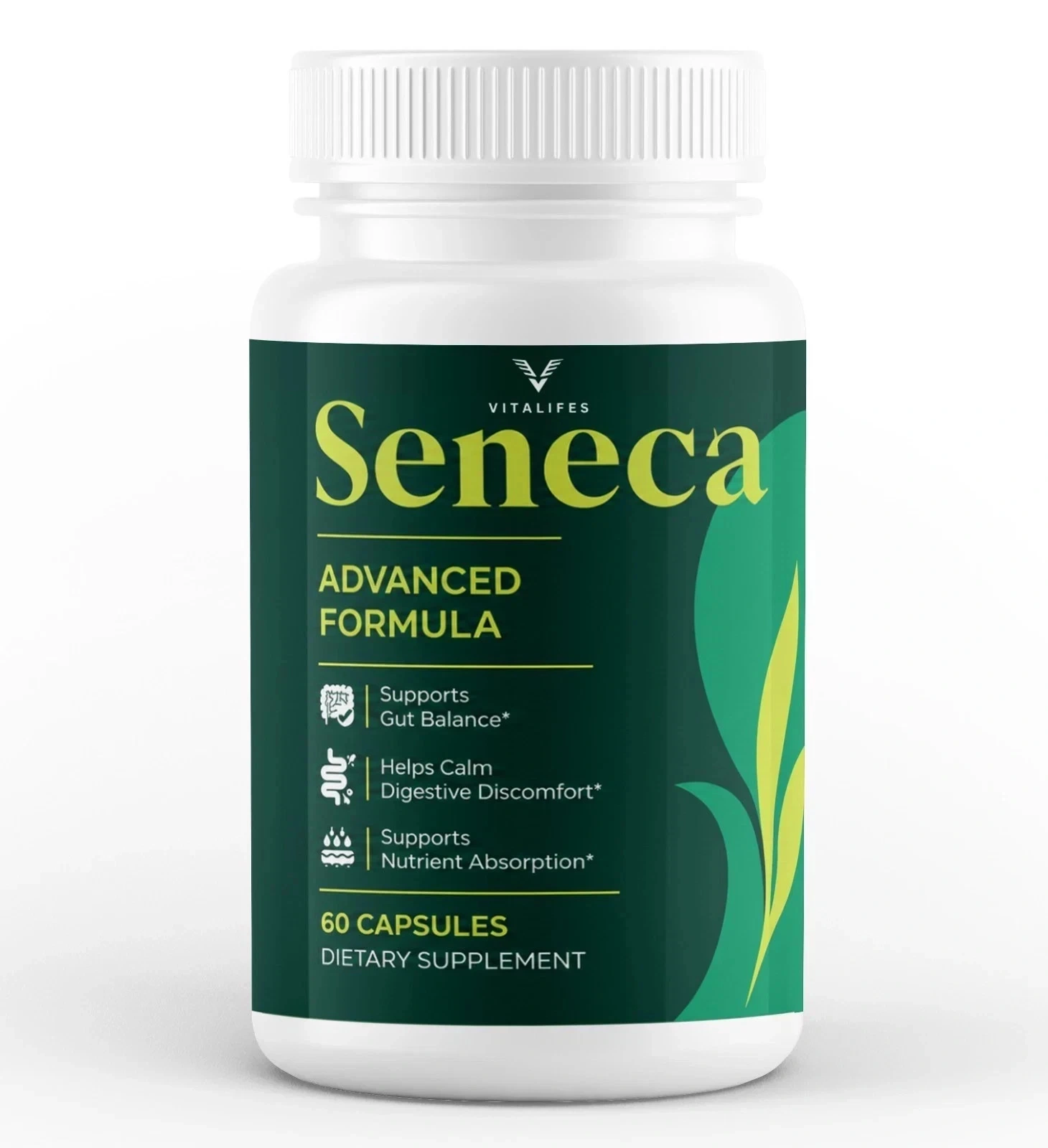
One bottle of Seneca capsules

Want to read the label in person? Start with one bottle of Seneca.

Check today’s price

Seneca ingredients: questions

More answers on the full FAQ page.

What is in Seneca?

One Test Boost Proprietary Blend of 1000 mg per 2 capsules, holding nine ingredients: L-lysine HCL, apple cider vinegar, garcinia cambogia, tongkat ali, horny goat weed, wild yam, cinnamon, bitter melon and raspberry ketones.

Why do the ads name only six ingredients?

We do not know. The “Inside Seneca” image names six. The Supplement Facts panel on the bottle lists nine. The panel is the legal document, so the panel wins and we publish all nine.

How much of each ingredient is there?

Not published. A proprietary blend gives one total weight, so only the total, 1,000 mg, and the order of the list are known.

Is there fibre or a digestive enzyme in it?

No. Nothing on the panel is a fibre, a prebiotic, a probiotic or a digestive enzyme, which is the honest problem with a digestive-support product built this way.

What are raspberry ketones?

A flavour compound found in raspberries, sold in weight-loss products. Human evidence is very limited, and the amount here is not published.

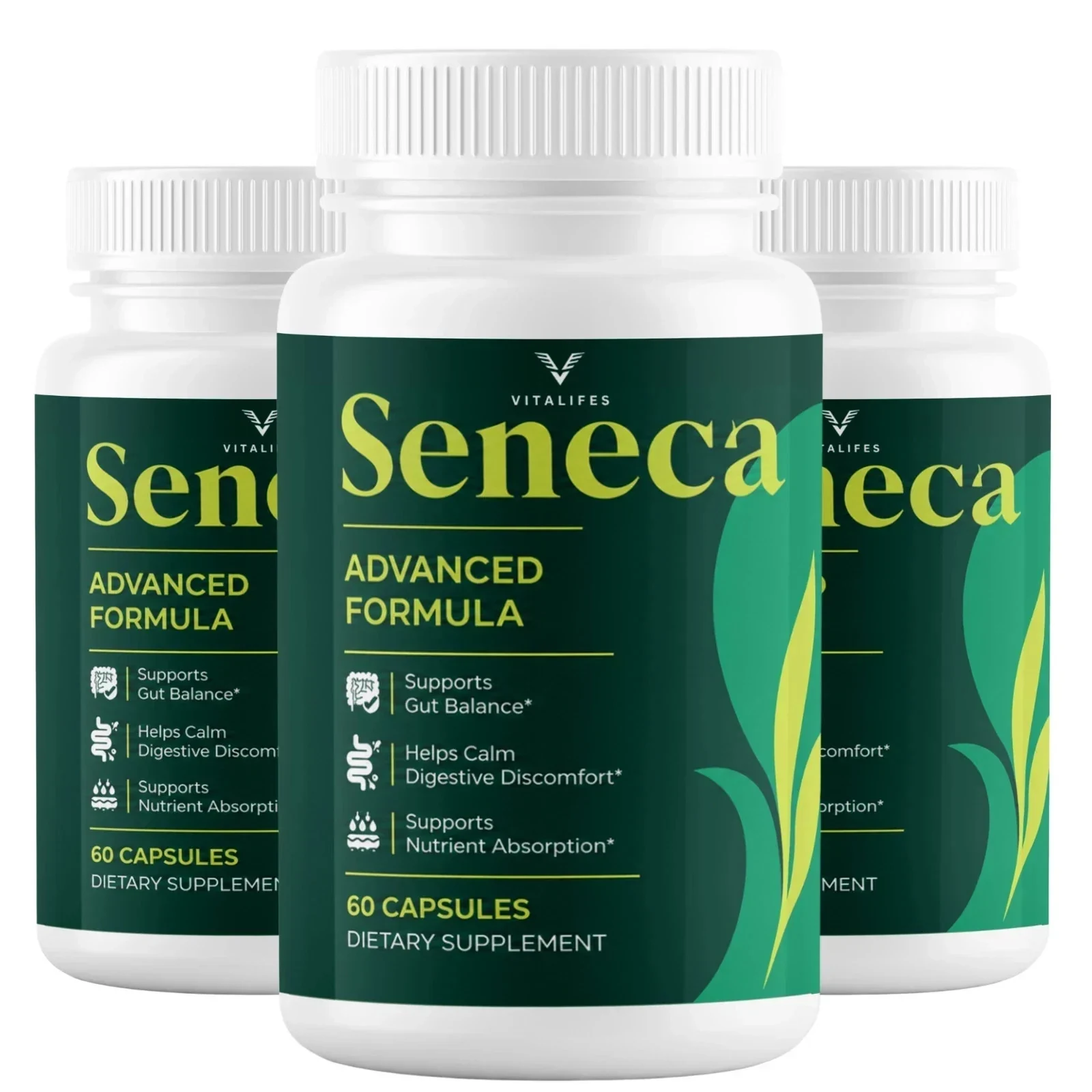
Three bottles of Seneca capsules

Ready to try Seneca?

Pick a pack and see the price at checkout. The money-back guarantee is 60 days from purchase, unless the sales page prints a longer window. Questions first? Call the order desk at +1 (302) 200-3480.

Sold through a USA Authorized Seneca Retailer. This site is not the manufacturer and earns when you buy.

Seneca · 1 or 2 capsules a day60 capsules a bottle

Add To Cart