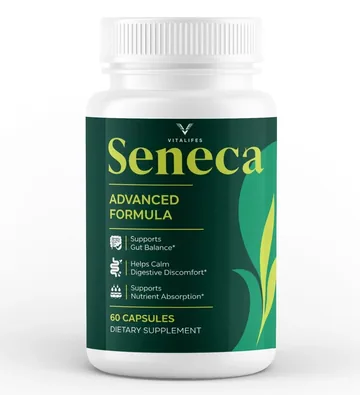
From the blog
Seneca Supplement Ingredients: What the 1,000 mg Blend Hides
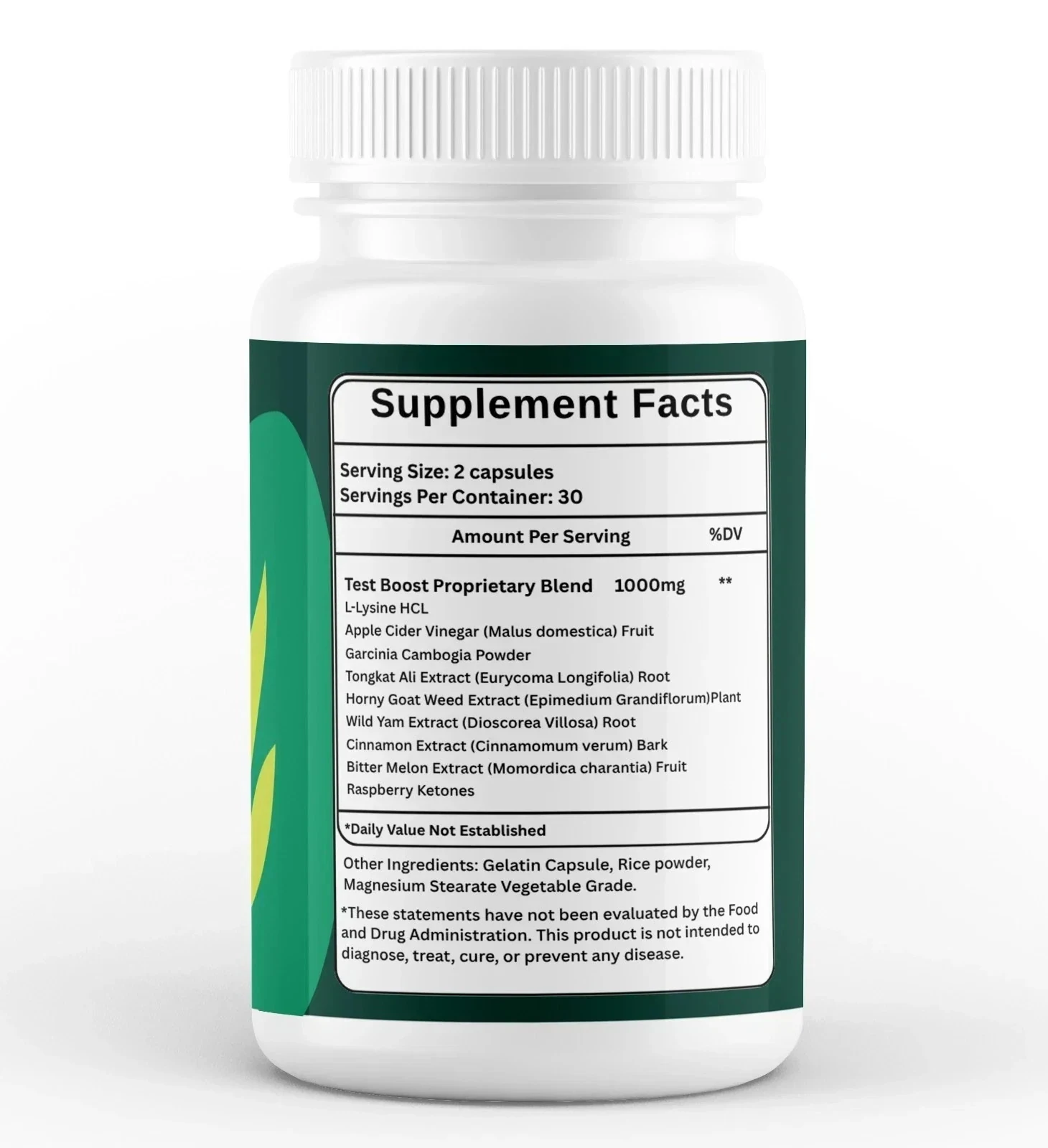
Seneca supplement ingredients are nine items inside one 1,000 mg proprietary blend per 2 capsules: L-lysine HCL, apple cider vinegar, garcinia cambogia powder, tongkat ali extract, horny goat weed extract, wild yam extract, cinnamon extract, bitter melon extract and raspberry ketones. The panel calls it the “Test Boost Proprietary Blend” and prints no amount for any single ingredient. The other ingredients are a gelatin capsule, rice powder and magnesium stearate.
What “proprietary blend” means
On a Supplement Facts panel, most ingredients get their own line and their own amount. A proprietary blend is different. It gives one name, one total weight, and then a list of what is inside, without saying how much of each.
Blends are legal in the United States. Makers usually explain them as protecting a recipe from copycats, which is a real commercial concern. For a buyer, though, they create a practical problem: you cannot compare any single ingredient with the amount used in research, and you cannot compare two products on price per milligram.
That is the trade-off, and it is worth stating plainly. A blend protects the maker and costs the buyer information. Nothing about it is sinister, and nothing about it is informative either.
The Seneca blend, line by line
The Seneca label shows a serving of 2 capsules and 30 servings per bottle. Under the heading is one line: “Test Boost Proprietary Blend 1000mg,” with a double asterisk meaning no Daily Value is established.
Nine ingredients follow, in this order.
| Order | Ingredient | Latin name and part |
|---|---|---|
| 1 | L-Lysine HCL | An essential amino acid, as the hydrochloride salt |
| 2 | Apple cider vinegar | Malus domestica, fruit |
| 3 | Garcinia cambogia powder | Garcinia gummi-gutta, fruit rind |
| 4 | Tongkat ali extract | Eurycoma longifolia, root |
| 5 | Horny goat weed extract | Epimedium grandiflorum, plant |
| 6 | Wild yam extract | Dioscorea villosa, root |
| 7 | Cinnamon extract | Cinnamomum verum, bark |
| 8 | Bitter melon extract | Momordica charantia, fruit |
| 9 | Raspberry ketones | A flavour compound found in raspberries |
The order is not decoration. US rules require blend ingredients to be listed from most to least by weight. So L-lysine HCL is the largest share and raspberry ketones the smallest. That is the only quantitative fact the label gives you beyond the total.
It is also worth noticing what the blend is called. The panel does not say “gut blend” or “digestive complex.” It says Test Boost Proprietary Blend, on a bottle whose front promises gut balance and digestive comfort. We have no explanation for that, and we are not going to invent one.
The arithmetic: what 1,000 mg could mean
1,000 mg is one gram, which is a normal total for a two-capsule serving. Two capsules of 500 mg each is an ordinary size, and some of that weight is the rice powder filler on the other-ingredients line, so the active total may be lower still.
Split evenly across nine ingredients, each would be about 111 mg. That is only an illustration. A top-heavy split, which is more common in practice, might give 500 mg to the first ingredient and leave the last three at a few milligrams each.
| Scenario | First ingredient | Last ingredient |
|---|---|---|
| Even split | About 111 mg | About 111 mg |
| Top-heavy (example) | 400–600 mg | A few mg |
| Actual | Not published | Not published |
Why the amount matters
Herbal research tests a specific extract at a specific daily dose. Tongkat ali studies typically use 200–400 mg a day of a standardised extract (NIH Office of Dietary Supplements, “Dietary Supplements for Exercise and Athletic Performance”). Garcinia trials generally use gram-level doses of material standardised to a percentage of hydroxycitric acid (National Center for Complementary and Integrative Health, “Garcinia Cambogia”). Cinnamon studies commonly sit in the range of one to six grams a day (National Center for Complementary and Integrative Health, “Cinnamon: Usefulness and Safety”).
Add those three together and you are already well past 1,000 mg, before the other six ingredients get a share. So on any plausible split, most ingredients in this blend are present at a fraction of the amounts used in the research they borrow their reputation from. That is not an accusation; it is arithmetic you can do yourself with the panel in front of you.
Standardisation: the second missing number
Amount is only half the story. Herbal extracts are also described by strength: “standardised to 60% HCA,” or “20% icariin.” Two products with the same milligram figure can differ several-fold in active compounds.
The Seneca panel states no standardisation for any of its extracts. It says “extract” for most of them and “powder” for garcinia cambogia, which usually means unconcentrated material. Where a label gives neither an amount nor a strength, the ingredient name is doing all of the work.
What the blend name implies, and what the label claims
The blend is called the Test Boost Proprietary Blend. On a men’s testosterone product that name would at least be coherent. Here it sits on a bottle whose three front claims are about gut balance, digestive discomfort and nutrient absorption.
The most likely explanation is dull: the same blend, or the same label template, is used across more than one product, and nobody changed the name. We have seen the identical blend name on a different product in a different category from the same label family. That is a guess about a process, not a fact about this bottle, and we flag it as a guess.
What matters for a buyer is simpler. Structure-function claims like the three on this bottle are allowed without FDA approval, as the FDA explains in its consumer guide to supplements (U.S. Food and Drug Administration, “Dietary Supplements: What You Need to Know”). The blend name is not a claim at all. Neither one tells you what is in the capsule.
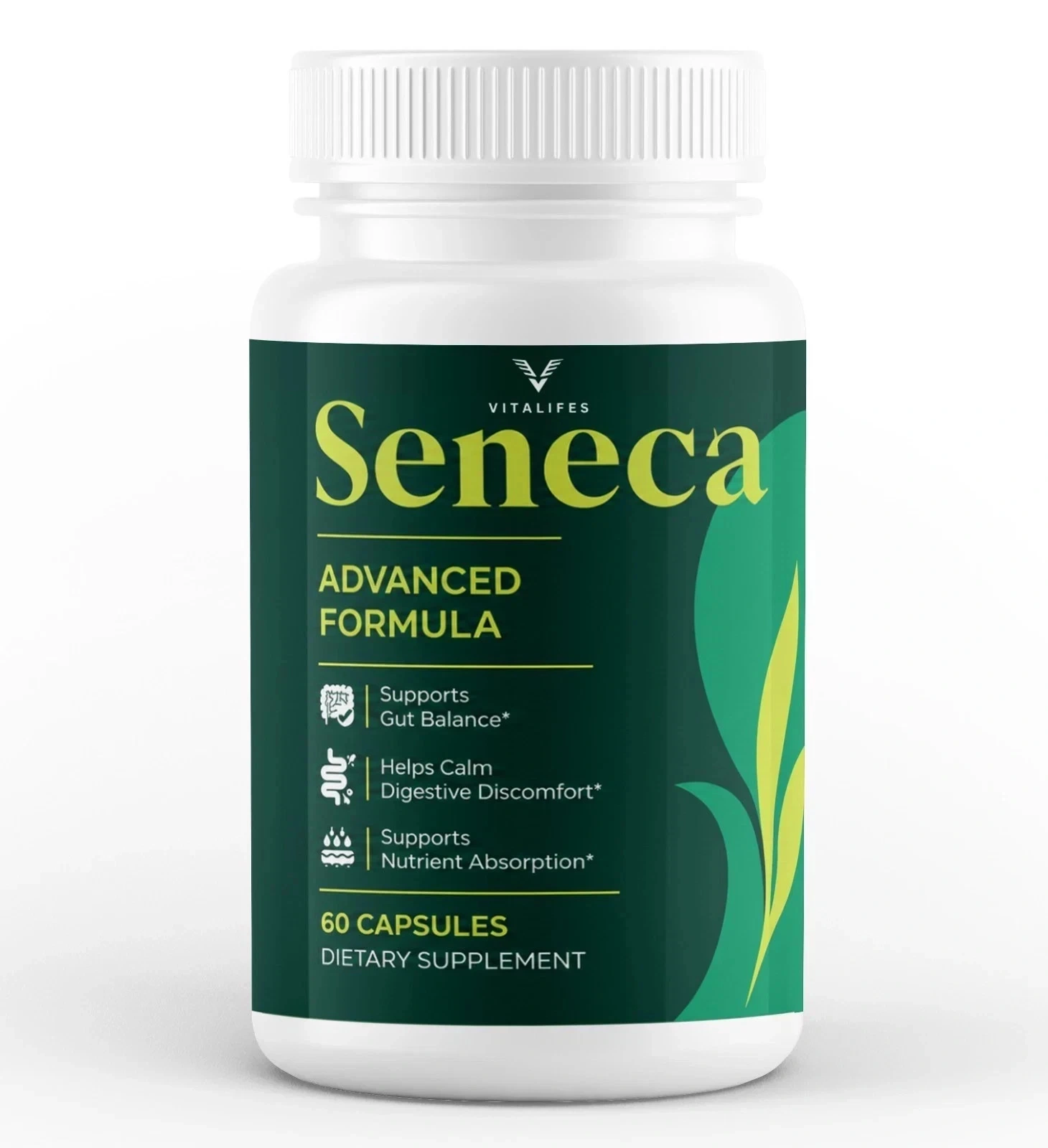
See the full Seneca label and packs.
Check today’s priceQuestions worth asking the seller
- How many milligrams of each of the nine ingredients are in one serving?
- Are any of the extracts standardised, and to what percentage?
- What is the extract ratio for the herbs (4:1, 10:1)?
- Is there a certificate of analysis for this lot, and may I see it?
- Why is the blend called the Test Boost Proprietary Blend on a digestive product?
- Which laboratory is behind the “product/lab tested” roundel?
Call the order desk at +1 (302) 200-3480 and ask before you buy a multi-bottle pack. A seller who can answer is worth more than a badge, and a seller who cannot has told you something useful too.
How a more open label would look
A transparent version of this panel would give each ingredient its own line: “Apple cider vinegar (fruit) 200 mg, Cinnamon extract (bark) 100 mg,” and so on, adding up to 1,000 mg. It would state standardisation where it matters, and it would name the blend after what the product is for.
Those numbers are a format example, not Seneca’s real split. If the seller ever publishes the actual amounts, we will add them here and date the change.
How this compares with other labels
Blends are the norm rather than the exception in this corner of the market. Walk through any supplement aisle and you will see “digestive matrix,” “vitality complex,” “metabolic blend,” each with one number and a list underneath.
A minority of brands print every amount. They tend to be the ones selling a single well-studied ingredient, where the number is the selling point rather than something to keep quiet about. A psyllium product prints the grams. A probiotic that has done the work prints the strain and the CFU count.
So the question is not whether a blend is allowed, but why this particular maker chose one. If the amounts were impressive, printing them would sell more bottles.
A quick way to compare two blends
Compare the totals
Blend A at 1,000 mg and blend B at 700 mg are not comparable until you look at what is inside each.
Count the ingredients
Nine ingredients in 1,000 mg averages 111 mg. Four ingredients in 700 mg averages 175 mg. Fewer names is often more of each.
Check the first name
The first ingredient is the largest share, so it tells you what the product is really built around.
Look for standardisation
A standardised extract at a smaller weight can carry more active compound than a large weight of plain powder.
Ask both sellers
The one who answers with numbers is the one worth buying from.
The bottom line
A 1,000 mg proprietary blend tells you the total weight and the order of nine ingredients, and nothing about how much of each you take. That is legal, common, and the main reason our expectations for Seneca are modest.
Read the panel, ask for amounts, and judge any supplement by your own notes over a few weeks rather than by the name printed above the list.
Sources
- National Center for Complementary and Integrative Health. Garcinia Cambogia. NCCIH, current page. Checked September 24, 2026.
- National Center for Complementary and Integrative Health. Cinnamon: Usefulness and Safety. NCCIH, current page. Checked September 24, 2026.
- National Center for Complementary and Integrative Health. Bitter Melon. NCCIH, current page. Checked September 24, 2026.
- NIH Office of Dietary Supplements. Dietary Supplements for Exercise and Athletic Performance. NIH ODS, current revision. Checked September 24, 2026.
- U.S. Food and Drug Administration. Dietary Supplements: What You Need to Know. FDA, current revision. Checked September 24, 2026.
Questions on this topic
More answers on the full FAQ page.
What is a proprietary blend?
A group of ingredients listed with one total weight, without individual amounts.
How much of each herb is in Seneca?
Not published. The blend total is 1,000 mg per 2 capsules.
Which ingredient is the largest share?
L-lysine HCL, because blend ingredients are listed from most to least by weight.
Are proprietary blends legal?
Yes, in the US, as long as the total and the full ingredient list are given.
Why is the blend called “Test Boost”?
That is what the panel prints. It is a testosterone-marketing name on a product sold for digestion, and no explanation is published.
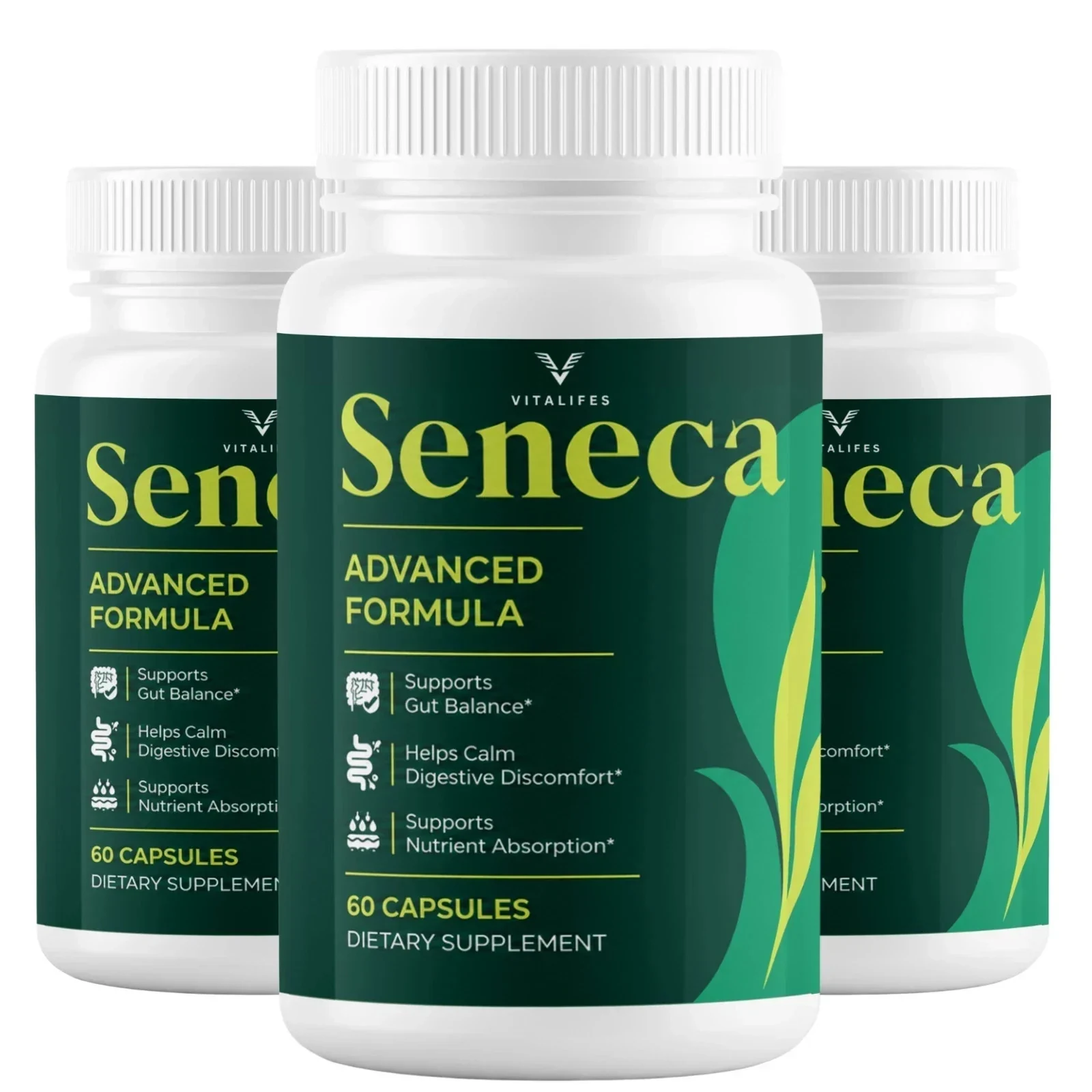
Ready to try Seneca?
Pick a pack and see the price at checkout. The money-back guarantee is 60 days from purchase, unless the sales page prints a longer window. Questions first? Call the order desk at +1 (302) 200-3480.
Sold through a USA Authorized Seneca Retailer. This site is not the manufacturer and earns when you buy.Keep reading
What “probiotic formula” should mean
What a probiotic actually is, why the strain code and CFU count matter more than the word,…
Read more →What actually helps digestion
The things that genuinely settle everyday digestion, ranked: fibre, meal habits, water, sl…
Read more →Seneca ingredients
All nine parts of the 1000 mg blend.
Read more →